
Vertigo Test and Treatment Clinic in Lucknow – VNG and BPPV
Videonystagmography (VNG) Test | Vestibular Evoked Myogenic Potential (VEMP) Test | Video Head Impulse Test (vHIT) | Dix-Hallpike Test | Head Positions Test | Mc Clure Pagnini Test | Supine Straight Head Extension Test | Caloric Test
Looking for a Vertigo Test and Treatment Clinic in Lucknow?
OtoSpeak – Speech, Hearing and Vertigo Clinic is the only top place where you can get complete Vertigo Tests done. Our clinic actually provides Videonystagmography (VNG) Test, Vestibular Evoked Myogenic Potential (VEMP) Test, Video Head Impulse Test (vHIT), Vertigo Positisional Tests (Dix-Hallpike Test, Head Positions Test, Mc Clure Pagnini Test, Supine Straight Head Extension Test), Caloric Test. We definitely offer these hearing tests for proper diagnosis. Basically, we provide the same high-quality Balance and Vertigo Services in Lucknow with our skilled Audiologists. Book your appointment today and actually get proper care that will definitely check your vertigo and Balance problems correctly.Vertigo Tests Clinic in Lucknow Offerings
Videonystagmography (VNG) Test
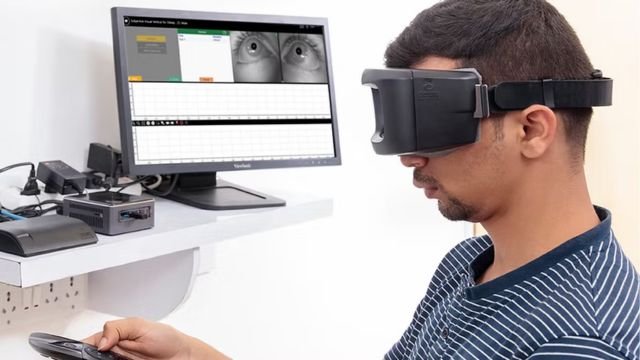
Are you looking for a Videonystagmography (VNG) Test in Lucknow?
- Precise eye movement tracking technology
- Comprehensive balance disorder assessment
- Non-invasive diagnostic procedure
OtoSpeak clinic in Lucknow uses special goggles to test eye movements and check inner ear problems itself. This further helps doctors find the exact cause of hearing and balance issues. Our VNG test actually checks balance problems and dizziness to definitely find what causes vertigo through complete testing.
Vestibular Evoked Myogenic Potential (VEMP) Test
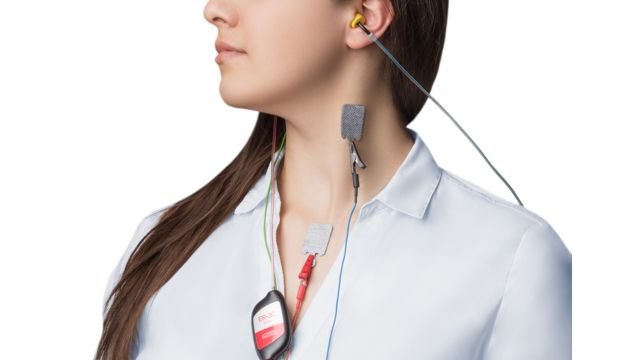
Are you looking for a Vestibular Evoked Myogenic Potential (VEMP) Test in Lucknow?
- Evaluates inner ear otolith function
- Non-invasive muscle response testing
- Identifies specific vestibular disorders
Basically, we do specialised hearing tests that check how your ear muscles respond to sounds, and it’s the same way we test your balance organs at the OtoSpeak clinic in Lucknow. As per our VEMP testing, we find vestibular problems that cause balance issues. Regarding this test, it is comfortable and gives accurate results for diagnosis.
Video Head Impulse Test (vHIT)
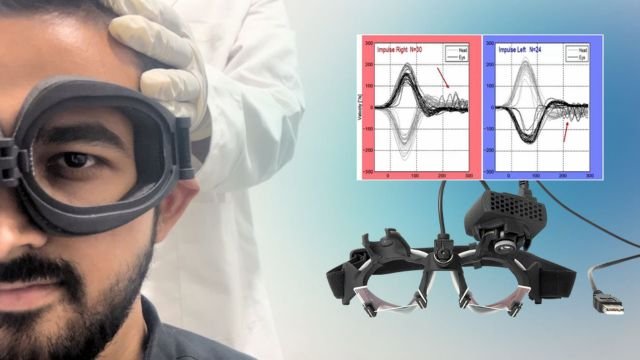
Are you searching for a reliable Video Head Impulse Test (vHIT) clinic in Lucknow?
- Advanced vestibular technology
- Individual canal assessment
- High-precision diagnostic results
OtoSpeak – Speech, Hearing and Vertigo Clinic in Lucknow uses new technology that checks balance problems through quick head movements. This technology itself helps doctors understand how the inner ear and eyes work together, which further helps in treating vertigo patients. We are seeing that our vHIT system can find problems in the ear canals with very good accuracy, and this helps doctors check balance disorders in a complete way.
Dix-Hallpike Test
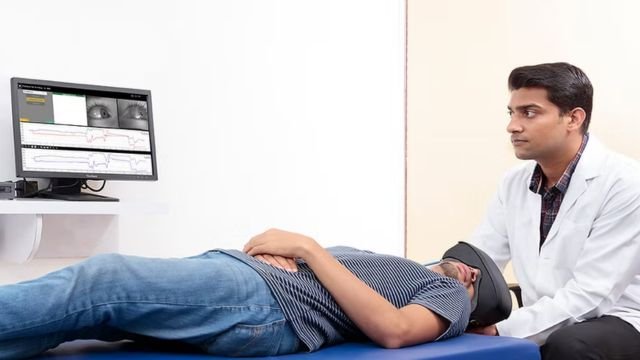
Are You Looking for Dix Dix-Hallpike Vertigo Test Clinic in Lucknow?
- Detects BPPV with precision
- Quick diagnostic maneuver
- Immediate symptom assessment
The OtoSpeak clinic in Lucknow surely uses expert positioning methods to identify BPPV, a common cause of dizziness. Moreover, this diagnostic technique, Dix-Hallpike helps doctors confirm benign paroxysmal positional vertigo through specific patient movements. Our trained Audiologist check eye movements and symptoms during this important test as per proper diagnosis methods. The examination is done regarding the accurate detection of the condition.
Head Positions Test
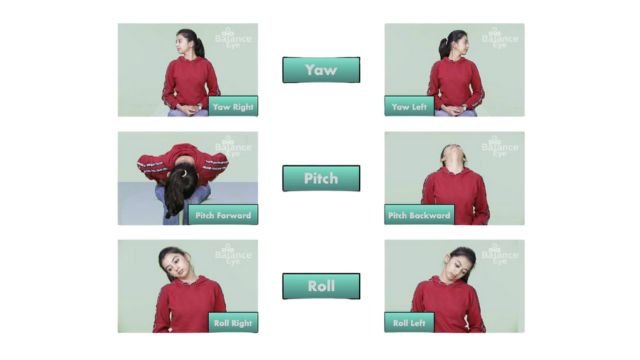
Are you searching for the Head Positions Test in Lucknow?
- Multiple positioning assessments
- Identifies vertigo triggers
- Comprehensive symptom evaluation
Also, OtoSpeak – Speech, Hearing and Vertigo Clinic in Lucknow surely conducts complete positional tests to check vertigo and dizziness using different head movements. Moreover, these tests help doctors understand the exact cause of balance problems in patients. Our detailed check-up surely finds the exact causes behind balance problems for proper treatment plans. Moreover, this helps restore inner ear health effectively.
Mc Clure Pagnini Test
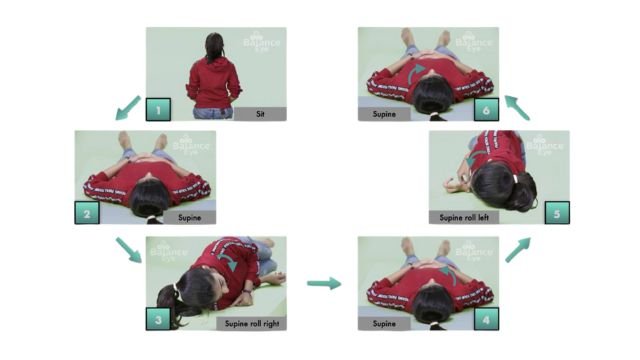
Are you looking for a Mc Clure Pagnini Test in Lucknow?
- Detects horizontal canal BPPV
- Lateral positioning maneuver
- Professional nystagmus observation
OtoSpeak – Speech, Hearing and Vertigo Clinic in Lucknow actually uses a special head test to definitely find spinning problems in your ear’s balance part. Our experienced Audiologists observe nystagmus patterns during testing, which further helps in the accurate identification of lateral canal disorders.
Supine Straight Head Extension Test
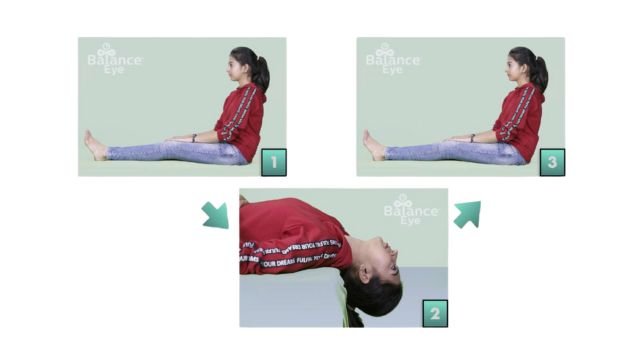
Are you looking for a Supine Straight Head Extension Test in Lucknow?
- Evaluates posterior canal function
- Controlled positioning technique
- Precise symptom monitoring
As per the controlled supine positioning method, a targeted diagnostic assessment is done at OtoSpeak – Speech, Hearing and Vertigo Clinic in Lucknow regarding posterior canal BPPV evaluation. Our Audiologists actually watch eye movements and symptoms during this special test to definitely find the right ear canal.
Caloric Test
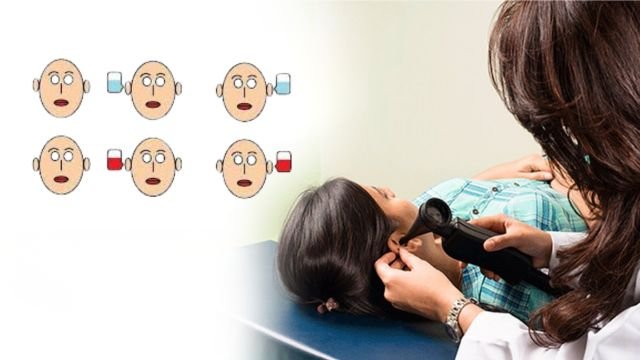
Are you searching for Caloric Test in Lucknow?
- Evaluates vestibular nerve function
- Uses controlled temperature stimulation
- Identifies inner ear balance disorders
OtoSpeak clinic in Lucknow actually uses a special test that puts warm and cool water in your ears to definitely check how well your inner ear works for hearing and balance problems. Our caloric test actually checks how your inner ear responds to temperature changes. This definitely helps us find out why you have balance problems or feel dizzy.
Why Vertigo Tests and Treatments are Important?
Accurate Diagnosis of the Cause
Vertigo is actually a symptom that shows something else is wrong. It is definitely not a disease by itself. Basically, vertigo tests help doctors find out if the problem is coming from the inner ear, nerve, or brain – it’s the same process for checking all these areas. Moreover, tests like VNG and caloric testing actually help doctors find the exact problem with balance issues. These tests definitely identify conditions like BPPV or Ménière’s disease early so treatment can start quickly.
Guiding Effective and Targeted Treatment
We are seeing that vertigo treatment depends only on what is causing the problem. Test results actually help audiologists choose the best treatment, such as canalith repositioning maneuvers, vestibular rehabilitation therapy, or medical referral. These results definitely guide them to pick the most effective intervention for each patient. We are seeing that without proper testing only, treatment may not work or can make symptoms worse.
Differentiating Vertigo from Other Disorders
Basically, many conditions like migraines, low blood pressure, and brain disorders can cause the same symptoms as vertigo. Specialized vestibular testing helps to further differentiate true vestibular vertigo from non-vestibular dizziness itself. Basically, this stops wrong diagnosis and treatments that aren’t needed, so patients get the same proper care based on scientific proof instead of just looking at symptoms.
Preventing Recurrence and Complications
Ensuring Patient Safety and Rehabilitation Success
Basically, vertigo makes older people fall more and get hurt the same way it increases injury risk for everyone. We are seeing that hearing tests help doctors start treatment quickly and make only safe plans for getting better. Vestibular therapy based on test results helps retrain the balance system itself, which further ensures safer movement and faster recovery.
Improving Quality of Life
Vertigo surely causes major problems in daily work and social activities. Moreover, it badly affects how well people can perform their regular tasks. Also, the right check-up and treatment actually help reduce dizziness, feeling sick, and balance problems. This definitely makes patients feel better and more stable. When we actually restore balance function and confidence in movement, patients definitely experience better physical comfort, emotional well-being, and overall quality of life.
Best Treatment of Vertigo and Balance Problems
Vestibular Rehabilitation Therapy (VRT)

- Customised exercise programs tailored to individual vestibular conditions
- Progressive balance training to improve stability and coordination
- Comprehensive assessment and ongoing monitoring of treatment progress
Are you searching for a reliable Vestibular Rehabilitation Therapy Centre in Lucknow?
Our VRT program actually helps restore your balance through specialised treatment. You will definitely get comprehensive care for a better balance. Our skilled Audiologist surely create customised exercise plans to treat dizziness, vertigo, and balance problems. Moreover, these protocols are specifically designed to address each patient’s individual needs. As per proven methods, we help retrain your brain regarding balance signals, reducing symptoms and improving daily function.
Epley Maneuver
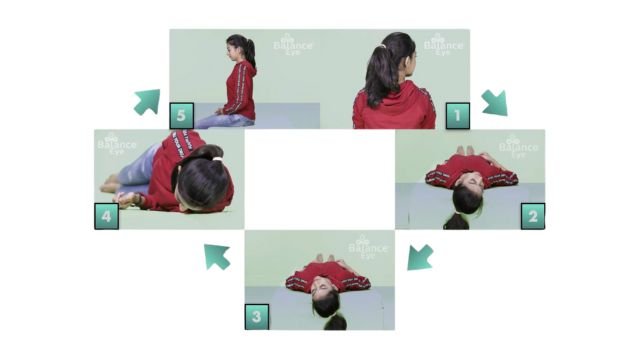
- For Posterior Canal BPPV
- Quick and effective treatment for posterior canal BPPV symptoms
- Performed by certified specialists with extensive repositioning experience
Are you Looking for an audiologist for the Epley Maneuver in Lucknow?
Basically, we do the Epley Maneuver the same expert way to fix your BPPV vertigo problem. This technique actually moves the small crystals back to where they should be in the ear. It definitely helps treat the spinning feeling that happens when you move your head. Our trained doctors make sure treatment is safe and comfortable, and we are seeing that patients get quick relief from bad spinning feelings only, helping them get their balance back.
Yacovino Maneuver
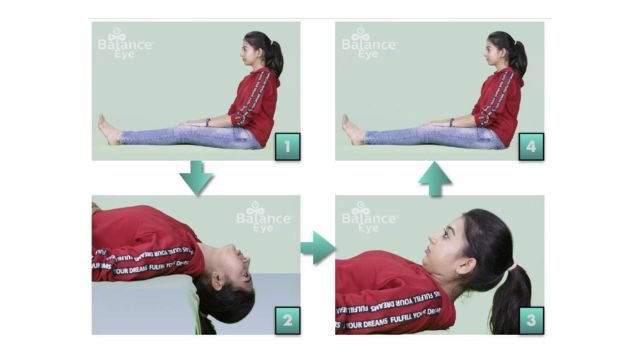
- For Anterior Canal BPPV
- Advanced repositioning technique for complex vestibular conditions
- Precise procedure execution by highly trained vestibular specialists
Are you looking for an audiologist for the Yacovino Maneuver in Lucknow?
Our specialised Yacovino Maneuver treatment helps fight central positional vertigo itself. This method can further reduce your dizziness problems. We are seeing that this special method only targets certain inner ear problems that affect your balance system. Our experienced doctors perform this precise repositioning procedure to reduce persistent vertigo symptoms further, helping the condition itself improve so patients can return to normal daily activities with renewed confidence.
Semont Maneuver
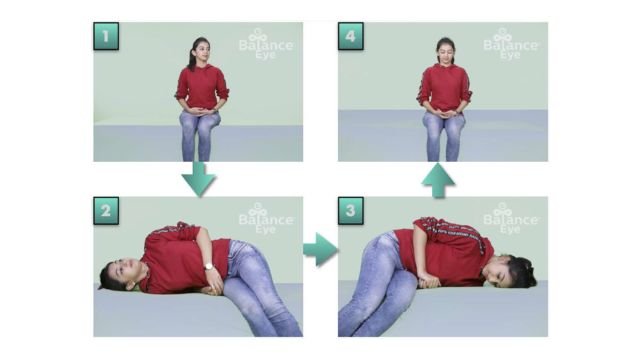
- For Posterior Canal BPPV
- Swift lateral positioning movements for effective crystal displacement
- Alternative to Epley Maneuver with comparable success rates
Are you searching for an audiologist for the Semont Maneuver in Lucknow?
Overcome posterior canal BPPV with our expertly executed Semont Maneuver. This rapid repositioning technique uses swift lateral movements to dislodge and relocate displaced crystals from the semicircular canal. Our experienced professionals perform this proven liberatory procedure with precision, delivering immediate relief from vertigo symptoms and restoring your natural balance function effectively.
Barbecue Roll Maneuver
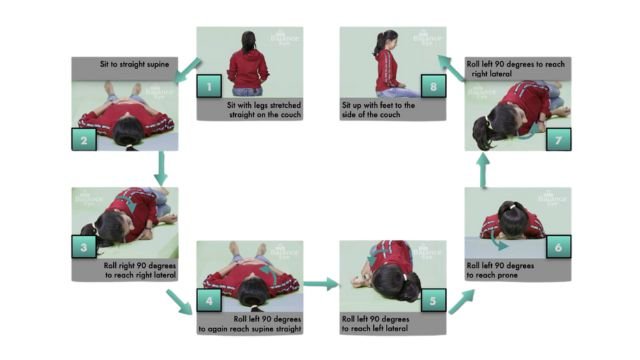
- For Horizontal Canal Geotropic BPPV
- Sequential rolling movements to effectively reposition displaced crystals
- High success rate in eliminating lateral canal vertigo symptoms
Are you looking for an audiologist for the Barbecue Roll Maneuver in Lucknow?
The Barbecue Roll Maneuver surely provides effective treatment for horizontal canal BPPV. Moreover, this professional technique offers reliable results for managing this specific vestibular condition. Basically, this special rotating method moves the displaced crystals in the ear canal to the same correct position, giving quick relief from dizziness when you change positions. Our expert team basically ensures the same proven treatment is done properly, helping restore your balance and eliminate uncomfortable spinning sensations.
Gufoni Maneuver
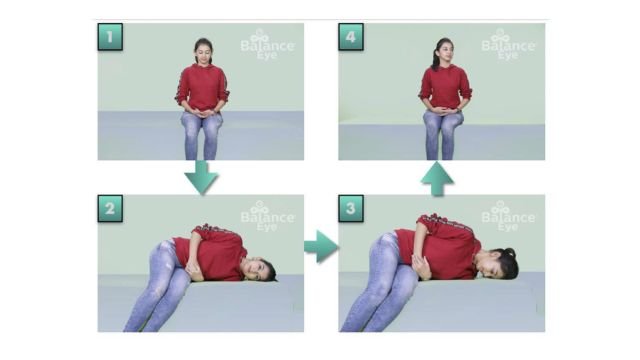
- For Lateral Canal Geotropic BPPV
- A combination of strategic head and body positioning movements
- Effective crystal repositioning with minimal patient discomfort
Are you searching for a Gufoni Maneuver Centre in Lucknow?
The Gufoni Maneuver surely provides targeted treatment for lateral canal BPPV when performed by skilled practitioners. Moreover, this technique offers effective relief for patients suffering from this specific type of vertigo. We are seeing that this working method uses only special head movements to remove displaced crystals from horizontal semicircular canals. Basically, our doctors give you the same precise treatment that quickly fixes vertigo problems and makes your balance better for a good life.
Appiani Maneuver
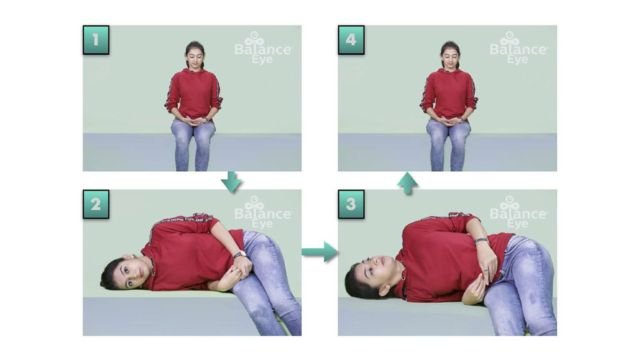
- For Lateral Canal Apogeotropic BPPV (Converts apogeotropic to geotropic)
- Precise crystal repositioning for challenging vestibular cases
- Expert execution ensuring optimal treatment outcomes and patient safety
Are you looking for an audiologist for the Appiani Maneuver in Lucknow?
Basically, we treat complex balance problems using the same specialized Appiani Maneuver technique. This advanced repositioning method surely targets specific types of spinning dizziness that affects the back part of the ear canal. Moreover, it works specifically on positional vertigo problems in the posterior semicircular canal. Our trained doctors surely perform this careful treatment to move the displaced crystals back to their correct position.
Virtual Reality Rehabilitation

- For Central Vestibular Pathology
- Immersive 3D environments for realistic balance training scenarios
- Gamified rehabilitation exercises that enhance patient engagement and motivation
Are you searching for a reliable Vestibular Rehabilitation Therapy Centre in Lucknow?
VR technology at OtoSpeak surely helps patients recover faster from speech problems. Moreover, this new method makes treatment more effective than traditional approaches. Further, our virtual reality systems surely create safe and controlled spaces for balance training and inner ear treatment. Moreover, these immersive environments help patients practice without any risk of falling or injury. This new method speeds up healing and makes therapy more interesting and interactive as per recent studies.
Types of Vertigo/Balance Disorders
Benign Paroxysmal Positional Vertigo (BPPV)
What is Benign Paroxysmal Positional Vertigo (BPPV)?
- The inner ear problem actually causes short spinning feelings when you move your head in certain ways. It definitely happens when you change positions quickly.
- As per medical studies, calcium crystals get displaced from the ear organs and create wrong movement signals regarding head direction changes.
- As per medical studies, this balance problem causes a spinning feeling and stomach sickness for a few seconds only. Regarding symptoms, patients feel dizzy with a turning sensation and want to vomit.
What Treatments are available for Benign Paroxysmal Positional Vertigo (BPPV)?
Moreover, the Epley maneuver actually moves the displaced crystals back to their right place in the ear. This procedure definitely works well to fix the crystal problem.
Vestibular exercises actually strengthen the balance system and definitely reduce sensitivity to head movements that trigger symptoms.
Medication surely gives quick relief from symptoms, while physical therapy exercises fix the main problem of crystal movement that causes dizziness. Moreover, this combination approach treats both immediate discomfort and the root cause of vertigo.
Labyrinthitis
What is Labyrinthitis?
- As per medical studies, inner ear swelling affects hearing and balance parts, causing dizziness and hearing problems. Regarding symptoms, patients experience spinning sensation and reduced hearing ability.
- Viral or bacterial infection causes inflammation in the labyrinth structures, which further disrupts the balance and hearing function itself.
- This condition actually affects both the hearing part and balance part of the inner ear, so patients definitely have hearing loss and balance problems at the same time.
What Treatments are available for Labyrinthitis?
- Anti-inflammatory medicines and antibiotics surely help fight infection, moreover corticosteroids reduce swelling in the ear parts that are affected.
- We are seeing that vestibular rehabilitation therapy only helps the brain get used to balance changes and makes recovery from symptoms faster.
- Doctors surely give anti-nausea medicines and balance exercises to treat the symptoms during the severe stage. Moreover, this treatment helps patients manage the acute phase in a better way.
Vestibular Neuritis
What is Vestibular Neuritis?
- As per medical findings, viral infection attacks the vestibular nerve regarding balance control, causing sudden severe dizziness without any hearing problems or other symptoms.
- As per medical studies, inflammation stops proper signals from inner ear to brain, regarding which patients feel strong spinning and movement feelings.
- As per medical observations, this acute condition happens after viral illness and affects the balance nerve but keeps hearing function completely normal. Regarding the symptoms, patients experience balance problems while their hearing remains perfectly fine.
What Treatments are available for Vestibular Neuritis?
- Corticosteroids reduce nerve inflammation in the acute phase itself, which further helps improve recovery and reduces how long symptoms last.
- Vestibular rehabilitation exercises help the central nervous system to further compensate for damaged vestibular nerve function. The system itself adapts effectively through these exercises.
- Basically, medicines control nausea and dizziness while the body heals naturally and therapy helps restore the same balance.
Meniere’s Disease
What is Meniere’s Disease?
- As per medical studies, this long-term inner ear problem causes sudden spinning feeling, hearing loss that comes and goes, ear ringing, and feeling of fullness in the ear. Regarding symptoms, patients experience these issues in episodes.
- Too much fluid actually builds up in the ear and definitely creates pressure that affects both hearing and balance.
- We are seeing a condition that gets worse over time with sudden attacks that can last for hours only, and this may cause permanent hearing loss.
What Treatments are available for Meniere’s Disease?
- Basically, eating less salt and taking water pills help control the same fluid buildup and symptoms.
- Intratympanic steroid injections surely provide direct treatment to the affected ear and help manage symptoms effectively. Moreover, this targeted approach delivers medicine straight to the problem area for better results.
- Advanced treatment options include vestibular nerve section or labyrinthectomy itself for severe cases that do not respond to further medical treatment.
Vestibular Paroxysmia
What is Vestibular Paroxysmia?
- As per medical findings, blood vessel pressure on the balance nerve causes short and frequent spinning attacks regarding vertigo that last for seconds to minutes.
- As per medical findings, blood vessels touching nerves cause sudden spinning feelings and balance problems that happen again and again. Regarding this condition, the nerve irritation triggers repeated episodes of dizziness and unsteady movement.
- This rare condition shows short vertigo episodes that happen many times daily with specific triggers, and the condition itself needs further study to understand these repeated attacks.
What Treatments are available for Vestibular Paroxysmia?
- Anticonvulsant medicines like carbamazepine actually reduce nerve overactivity and definitely help control how often vertigo attacks happen.
- As per medical studies, microvascular decompression surgery removes blood vessel pressure on the balance nerve regarding cases where medicines do not work.
- We are seeing that managing symptoms includes only avoiding triggers and doing balance exercises to improve overall balance function.
Probable Vestibular Paroxysmia
What is Probable Vestibular Paroxysmia?
- Basically, doctors diagnose vestibular paroxysmia when patients show the same typical symptoms but blood vessel pressing on nerve cannot be confirmed through tests.
- The patient actually has short episodes of dizziness that come back again, which definitely suggests nerve irritation, but we do not have clear scan reports or confirmed test results.
- We are seeing a suspected condition where the symptom pattern is only similar to vestibular paroxysmia, but we don’t have clear proof to confirm the diagnosis.
What Treatments are available for Probable Vestibular Paroxysmia?
- Trying anticonvulsant medicine surely helps doctors confirm the diagnosis, and moreover, it can effectively reduce the patient’s symptoms.
- As per medical practice, complete balance tests and scans check the root causes regarding inner ear problems and help doctors decide proper treatment methods.
- Conservative treatment actually includes changing lifestyle habits and watching the patient while doctors definitely check how well the treatment works and if the condition gets worse.
Vestibular Schwannoma/Acoustic Neuroma
What is Vestibular Schwannoma/Acoustic Neuroma?
- This benign tumor surely grows on the vestibular nerve and causes gradual hearing loss along with tinnitus. Moreover, it creates balance problems that develop slowly over time.
- We are seeing a slow-growing lump that only presses on the hearing and balance nerves, making symptoms worse over many months or years.
- We are seeing growth that is not cancer coming from nerve covering cells, and this can only affect many brain nerve functions.
What Treatments are available for Vestibular Schwannoma/Acoustic Neuroma?
- Basically, what are the treatments available for Vestibular Schwannoma – it’s the same as Acoustic Neuroma?
- As per medical guidelines, regular check-ups are suitable for small tumors that are stable and not causing worse symptoms. Regarding treatment, only watching and monitoring is needed for such cases.
- We are seeing that stereotactic radiosurgery only targets the tumor part very carefully while keeping the healthy brain and nerve parts safe.
- Basically, big tumors need surgery when they cause serious problems or keep growing and threaten the same body functions.
Perilymph Fistula (PLF)
What is Mixed Hearing Loss (MHL)?
- Further, the middle ear and inner ear connect abnormally, which actually allows fluid to leak out and definitely causes symptoms.
- We are seeing that when the oval or round window membranes get torn, it only creates pressure changes that affect our hearing and how the ear works.
- We are seeing this condition happens only from injury, pressure changes, or when ear parts are weak from birth.
What Treatments are available for Perilymph Fistula (PLF)?
- Moreover, basically, conservative treatment is the same as bed rest, keeping head up, and avoiding activities that increase brain pressure.
- Surgery surely repairs the torn membrane by using tissue grafts to fix it. Moreover, this helps restore the normal separation inside the ear.
- Further, limiting activities and avoiding pressure surely help stop more leakage and support the body’s natural healing. Moreover, these simple steps are important for proper recovery.
Vestibulotoxic Drugs
What is Vestibulotoxic Drugs?
- Some medicines damage the inner ear balance organs, which further causes dizziness and imbalance symptoms. The inner ear damage itself leads to problems with body balance.
- Some medicines like antibiotics, cancer drugs, and water pills can surely cause permanent damage to the inner ear cells. Moreover, this damage affects the body’s balance system and cannot be reversed.
- Drug-induced vestibular toxicity surely causes bilateral balance loss and chronic instability. Moreover, it may also lead to oscillopsia in patients.
What Treatments are available for Vestibulotoxic Drugs?
- Stopping the medicine right away actually prevents more damage to the balance system and definitely stops symptoms from getting worse.
- We are seeing that vestibular therapy helps the brain adjust when balance organs are damaged. This treatment only works by making the central nervous system learn new ways to keep balance.
- As per treatment guidelines, symptomatic support includes balance aids and fall prevention measures regarding maximizing the remaining vestibular function.
Bilateral Vestibulopathy (BV)
What is Bilateral Vestibulopathy (BV)?
- Basically, both inner ear balance parts don’t work properly or work the same way, causing long-term dizziness problems.
- Basically, this condition happens from the same causes like infections, medicines, or diseases that damage organs.
- We are seeing that patients have trouble with moving vision, they lose balance only in dark places, and they find it very hard to do activities that need good eyesight while moving.
What Treatments are available for Bilateral Vestibulopathy (BV)?
- Intensive vestibular rehabilitation surely helps the brain adapt better and improves balance through specific exercises. Moreover, this targeted approach maximizes the body’s natural healing process.
- Assistive devices and environmental changes further improve safety and mobility when balance itself becomes difficult.
- New treatments include vestibular implants that give artificial balance signals to the body as per medical research. These implants help restore normal balance function regarding patients with balance problems.
Persistent Postural-Perceptual Dizziness (PPPD)
What is Persistent Postural-Perceptual Dizziness (PPPD)?
- As per medical understanding, this is a long-term dizziness problem where patients feel unsteady when they stand up or move around. Regarding the condition, the unsteadiness continues for a long time and gets worse with upright position.
- The condition surely develops after the first vestibular problem occurs, and moreover it causes continuing balance issues and sensitivity to movement.
- Further, we are seeing problems in brain parts that only handle sensing and body balance control.
What Treatments are available for Persistent Postural-Perceptual Dizziness (PPPD)?
- As per vestibular rehabilitation methods, patients do repeated movement exercises and exposure therapy regarding motion sensitivity problems to make them less sensitive.
- As per medical practice, specific medicines and talking therapy help regarding anxiety problems and their symptoms.
- Basically, doing activities slowly and practicing balance helps train the body to move and stand the same way as normal people.
Superior semicircular canal dehiscence (SSCD)
What is Superior semicircular canal dehiscence (SSCD)?
- As per medical findings, the bone covering the upper ear canal is missing, creating abnormal pressure sensitivity and hearing problems.
- This condition actually causes dizziness from sounds, hearing your own voice too loud, and hearing loss with certain sound triggers. It definitely happens when specific sounds make these symptoms worse.
- The anatomical defect further allows pressure to pass between the brain and inner ear, which disrupts the normal functions itself.
What Treatments are available for Superior semicircular canal dehiscence (SSCD)?
- Surgical canal plugging or resurfacing surely repairs the opening in the bone, and moreover it stops abnormal pressure transfer while restoring normal function.
- Further, we are seeing that simple treatment includes only avoiding triggers and treating symptoms for mild cases that are not getting worse.
- The middle cranial fossa approach surely allows doctors to see and fix the bone defect in the superior canal directly. Moreover, this method provides clear access to repair the damaged area.
Cerebral Ischemia
What is Cerebral Ischemia?
- Blood flow to the brain actually gets reduced, which definitely causes less oxygen reaching brain cells and can make them die.
- We are seeing that this condition only causes balance problems, dizziness, and trouble with body coordination that affects daily work and activities.
- This can actually cause stroke-like symptoms that definitely need immediate medical care from specialists.
What Treatments are available for Cerebral Ischemia?
- Complete balance therapy is given to restore balance itself and further reduce vertigo symptoms.
- Also, as per medical requirements, special medicines are given to make blood flow better and stop the problem from happening again. Regarding treatment, doctors use specific drugs to improve circulation in the body.
- We are seeing doctors work together with brain specialists only to help patients get better and manage their problems for a long time.
Basilar migraine
What is Basilar migraine?
- Severe head pain problem that actually affects the brain stem and definitely causes dizziness with balance trouble.
- This condition surely causes temporary problems in the nervous system, including dizziness, changes in hearing, and difficulty with body coordination. Moreover, these symptoms affect how the brain and nerves work for a short time.
- This condition surely affects young women more frequently and is moreover triggered by hormonal changes or stress.
What Treatments are available for Basilar migraine?
- Basically, these are preventive medicines that reduce how often episodes happen and make them less severe – the same goal of stopping problems before they start.
- We are seeing that vestibular therapy helps to manage balance problems and reduce motion sensitivity between attacks only.
- Lifestyle modification counseling further includes identifying triggers and managing stress itself through proper techniques.
Cerebellar disease
What is Cerebellar disease?
- Cerebellar disorders surely affect coordination and balance, causing significant movement problems. Moreover, these conditions directly impact the brain’s ability to control smooth and precise motor functions.
- As per medical observations, this condition results in unsteady walking, shaking of hands, and problems regarding control of small movements.
- The condition can surely develop slowly over time or appear suddenly, and moreover, this depends on what is causing the problem underneath.
What Treatments are available for Cerebellar disease?
- Basically, patients do intensive balance training and coordination exercises that are the same but adjusted according to their individual symptoms and what they can do.
- Training with adaptive equipment helps improve safety and independence in daily activities further. The training itself focuses on making everyday tasks easier and safer.
- Further, as per medical practice, doctors use combined treatment with body exercises and hearing tests regarding balance problems.
Mal de Débarquement Syndrome (MdDS)
What is Mal de Débarquement Syndrome (MdDS)?
- We are seeing a feeling where people feel like they are still rocking or moving even after they stop travelling, and this happens only when someone has been in a boat, car, or plane for some time.
- As per medical observations, symptoms become worse when the body is still and may get better for some time regarding movement or motion.
- Basically, this condition affects women the same way by significantly impacting their daily life and overall functioning.
What Treatments are available for Mal de Débarquement Syndrome (MdDS)?
- Specialized vestibular rehabilitation methods are surely designed for motion desensitization therapy. Moreover, these protocols help patients overcome dizziness and balance problems effectively.
- Readaptation exercises actually help the brain adjust balance and spatial systems. These exercises definitely help recalibrate how the brain processes balance and space orientation.
- Supportive therapies surely help patients manage stress and cope with symptoms for long-term relief. Moreover, these strategies provide essential support in dealing with ongoing health challenges.
Vertebrobasilar insufficiency (VBI)
What is Vertebrobasilar insufficiency (VBI)?
- Blood flow reduces in vertebral and basilar arteries, which further causes symptoms in brainstem and cerebellum itself.
- Head movements trigger vertigo episodes and cause hearing changes with balance problems. The condition itself further affects the patient’s stability and hearing function.
- We are seeing this problem only in older people who have neck joint issues or blood vessel disease.
What Treatments are available for Vertebrobasilar insufficiency (VBI)?
- We are seeing that special balance exercises can help the body adjust better and reduce spinning feelings when changing positions only.
- Managing blood vessel risk factors actually includes controlling blood pressure and definitely improving blood flow in the body.
- Further, we are seeing that neck movement exercises only help to reduce symptoms that happen when the neck spine is in certain positions.
Multiple Sclerosis (MS)
What is Multiple Sclerosis (MS)?
- As per medical studies, this disease affects the body’s central nervous system and causes damage to nerve coverings, regarding symptoms like dizziness and other nerve problems.
- Balance problems occur in most MS patients due to brainstem and cerebellar involvement itself, and this further affects their daily activities.
- Symptoms actually go up and down with flare-ups and definitely get worse slowly over time.
What Treatments are available for Multiple Sclerosis (MS) Induced Vertigo?
- We are seeing complete balance treatment that is only made for brain problems and different disability levels.
- Further, as per fatigue management strategies, therapy sessions and daily activities can be optimised for better performance.
- Moreover, Training with helpful tools and walking aids actually makes daily tasks safer and definitely helps people become more independent.
Epilepsy
What is Epilepsy?
- We are seeing seizure problems that can only affect balance when the brain’s temporal area gets involved, and medicines also cause effects.
- Vestibular symptoms can happen during seizures themselves or further develop as side effects from anticonvulsant medicines.
- We are seeing that balance problems can only make people fall more and affect their daily life quality when they do not have seizures.
What Treatments are available for Epilepsy induced vertigo?
- Balance training programs are basically designed around seizure precautions and the same safety considerations.
- The medication itself needs review and adjustment to reduce dizziness side effects while further maintaining seizure control.
- Fall prevention methods and changes to surroundings actually help reduce injury risk when episodes happen. These strategies definitely make the environment safer during such times.
Vestibular Migraine (VM)
What is Vestibular migraine (VM)?
- Vestibular migraine is surely a type of migraine that causes repeated episodes of dizziness and spinning sensations. Moreover, these episodes may occur with headache symptoms or sometimes without any head pain at all.
- We are seeing that this is only the second most common reason for dizziness that affects millions of people with repeated balance and hearing troubles.
- Basically, during attacks you get sensitivity to movement, lose sense of direction, and become sensitive to sounds and light – it’s basically the same pattern of symptoms.
What Treatments are available for Vestibular Migraine (VM)?
- Basically, doctors choose migraine prevention medicines that reduce headache and balance problems the same time.
- Basically, this therapy uses exercises that help you get used to movement and train your balance – it’s the same approach for treating dizziness problems.
- Basically, you need to find what triggers the problem and change your lifestyle – the same includes eating different foods and managing stress better.
Posterior inferior cerebellar artery syndrome (Wallenberg Syndrome)
What is Posterior inferior cerebellar artery syndrome (Wallenberg Syndrome)?
- A stroke in the brainstem that affects the lateral medulla surely causes severe dizziness, balance problems, and difficulty in swallowing. Moreover, this condition leads to significant vertigo that affects the patient’s daily activities.
- Basically, it happens when blood flow gets blocked in the same artery that supplies the back part of the cerebellum.
- We are seeing that this causes problems with balance, brain coordination, and nerve functions only, which needs special treatment methods.
What Treatments are available for Posterior inferior cerebellar artery syndrome (Wallenberg Syndrome) induced Vertigo?
- Intensive vestibular rehabilitation further focuses on gaze stabilization and balance retraining protocols.
- Swallowing therapy coordination surely helps address dysphagia that often comes with this condition. Moreover, this treatment approach is essential for managing feeding difficulties.
- As per the treatment plan, patients receive training regarding adaptive strategies for managing ongoing symptoms and maximizing their ability to function independently.
Tumours of the brainstem and fourth ventricle
What is Tumours of the brainstem and fourth ventricle?
- Abnormal growths in the brainstem itself cause problems with balance, hearing, and coordination that get worse further over time.
- Symptoms develop slowly and further include vertigo, walking problems, and cranial nerve problems itself.
- We are seeing that this needs quick doctor check-up only, and doctors must work together with brain surgery experts.
What Treatments are available for Tumours of the brainstem and fourth ventricle Induced Vertigo?
- We are seeing that balance training before and after surgery only helps patients get better results and improves their body balance properly.
- Further, basically, we provide the same symptom management strategies to support patients during cancer treatment like radiation and chemotherapy.
- Basically, long-term rehab planning deals with the same leftover problems and functional issues that remain after treatment.
Head Trauma
What is Head Trauma?
- Balance problems and vestibular issues occur after concussion or brain injury when the inner ear itself gets affected. This condition can further lead to dizziness and coordination difficulties.
- Head injury patients surely experience ongoing dizziness, problems with balance, and sensitivity to movement. Moreover, these symptoms continue to affect them for extended periods after the initial trauma.
- Balance problems can actually affect both the inner ear and brain processing, so doctors definitely need to check everything carefully.
What Treatments are available for Head Trauma Induced Vertigo?
- As per specialized protocols, concussion rehabilitation addresses balance problems and inner ear issues at the same time regarding patient recovery.
- Graduated return-to-activity programs surely ensure safe progression while managing ongoing symptoms. Moreover, these programs help patients return to normal activities in a step-by-step manner.
- As per medical guidelines, complete therapy includes balance exercises with brain training for best recovery. This combined treatment approach is recommended regarding optimal patient outcomes.
Cervical Vertigo
What is Cervical Vertigo?
- Neck joint and muscle problems can actually affect how you sense your position in space and definitely cause balance issues.
- We are seeing dizziness that happens only when the neck spine sensors get disturbed and send wrong signals to the brain.
- This condition often develops further after neck injury, arthritis, or when poor posture habits continue for long periods itself.
What Treatments are available for Cervical Vertigo?
- We are seeing that neck exercises help make the spine move better and get stronger, which is only needed to bring back normal neck working.
- We are seeing special training exercises that help the neck and balance system work together better, improving only the body’s sense of position and movement in space.
- Teaching patients about correct posture and making workplace changes can actually prevent symptoms from coming back. These modifications definitely help stop the problem from happening again.
Syphilis
What is Syphilis?
- Late-stage syphilis can further cause inflammation in the inner ear itself, which leads to hearing loss and vertigo.
- Neurosyphilis surely affects the eighth cranial nerve and causes progressive hearing and balance problems. Moreover, these audiovestibular symptoms develop slowly over time.
- Basically needs immediate antibiotic treatment and the same time requires hearing and balance management.
What Treatments are available for Syphilis-induced Vertigo?
- Coordination with infectious disease specialists is needed for proper antibiotic treatment and further monitoring of the condition itself.
- We are seeing hearing aid checking and fitting only for managing nerve hearing loss problems.
- Basically, this is balance training to help with dizziness and prevent falls – the same exercises that improve how your inner ear works.
Age-related disequilibrium
What is Age-related disequilibrium?
- Older adults surely experience decline in balance across multiple body systems due to changes in their senses, muscles, and nervous system. Moreover, these combined changes significantly affect their overall stability and movement control.
- Reduced vision, hearing, body awareness, and muscle strength surely combine together to cause instability. Moreover, these multiple sensory and physical problems work together to make balance more difficult.
- This condition surely increases the risk of falls and can limit a person’s independence and quality of life. Moreover, it significantly affects daily activities and overall well-being.
What Treatments are available for Age-related disequilibrium?
- Balance training programs should surely be designed comprehensively to match older adults’ safety needs and physical abilities. Moreover, these programs must focus specifically on what older people can safely perform.
- We are seeing a method that uses multiple senses like sight, hearing, and body position to help with balance only.
- Fall prevention education surely includes teaching about home safety changes and training for using helpful devices. Moreover, this approach helps people learn practical ways to make their living spaces safer.
Orthostatic
What is Orthostatic?
- When a person stands up, blood pressure surely changes and causes dizziness and feeling light-headed. Moreover, this condition also creates problems with maintaining proper balance.
- We are seeing problems in the body’s control system that only affects how the heart and blood vessels work when changing positions.
- This condition can surely cause falls and fainting episodes in patients, and moreover, these incidents are particularly dangerous for elderly people.
What Treatments are available for Orthostatic?
- Positional training exercises surely help improve the body’s ability to tolerate standing upright. Moreover, these exercises reduce the severity of symptoms experienced by patients.
- As per medical requirements, doctors will coordinate medicines regarding heart problems and nerve system issues that control body functions.
- Lifestyle changes surely include proper water intake, wearing compression clothes, and slowly changing body positions. Moreover, patients need counseling about these simple techniques to manage their condition better.
What Our Client Say
Frequently Asked Question related to Vertigo Tests and Treatments
What tests will my doctor do to figure out what’s causing my vertigo?
When I first went in, the clinician asked about my symptoms, checked my ears/neurology and then did a few bedside tests to watch my eye movements and balance. The most common tests are the Dix–Hallpike (a positional test that looks for involuntary eye movements called nystagmus), a head-impulse or gaze exam, and simple balance checks (walking, turning, marching in place). If the cause isn’t clear they may order audiometry (hearing tests), videonystagmography/ENG or vestibular function tests, and sometimes brain imaging (MRI) to rule out central causes. These bedside tests (Dix–Hallpike etc.) are standard first steps.
What is the Dix–Hallpike test — and how does the Epley maneuver fit in?
From my experience, the Dix–Hallpike is the test where they quickly move you from sitting to lying with your head turned to one side while watching your eyes. If that provokes characteristic nystagmus and brief vertigo, it points to BPPV (benign paroxysmal positional vertigo). If BPPV is found, the clinician can immediately perform a canalith-repositioning maneuver such as the Epley (also called the Epley maneuver) to move the tiny inner-ear crystals back where they belong — often giving rapid relief. Some variations (Semont, modified Epley) are used depending on which canal is affected. There are precautions (e.g., neck/spine issues) so clinicians decide whether to perform the maneuver.
Are there safe things I can do at home to help?
Yes — once BPPV is diagnosed or your clinician teaches you, there are home repositioning or habituation exercises you can do. The home Epley (when taught by a clinician) and Brandt–Daroff exercises are commonly recommended for self-treatment or repeated episodes; vestibular-rehabilitation balance exercises (guided by a physiotherapist) are helpful for longer-standing imbalance. These exercises can initially provoke dizziness, so doing them in a safe place (and sometimes with a helper) is wise. Many people get significant improvement from these home programs.
Will I need medicine or surgery for vertigo?
Most of the time, medications are used for short-term symptom relief (e.g., vestibular suppressants to ease severe nausea/dizziness) rather than as a permanent fix. For BPPV the primary treatment is repositioning maneuvers (not drugs). Surgery is rare and reserved for very specific, severe, or structural inner-ear problems that don’t respond to conservative care. For other causes (vestibular migraine, vestibular neuritis, Menière’s disease) the treatment approach differs and may include longer-term medical or rehabilitative strategies. Your clinician will match treatment to the cause.
How long will vertigo last — can it come back?
It depends on the cause. For BPPV, many people get rapid relief after a few maneuvers or weeks of exercises, but recurrence is common (a meaningful fraction will have symptoms again over months to a year). Other causes (viral vestibular neuritis, Menière’s, migraine-related vestibulopathy) can take weeks to months to settle and sometimes require ongoing rehab. Vestibular rehabilitation helps the brain compensate and often improves balance and reduces dizziness over time.

Book A Free Appointment Today!
Our OtoSpeak – Speech, Hearing and Vertigo Clinic in Lucknow surely provides excellent Speech and Hearing treatment services. Moreover, patients receive high-quality care from experienced professionals. Also, basically, we are the best Speech and Hearing Clinic in Lucknow and provide the same comprehensive services with top speech therapists in the city. We are seeing that we provide only the Best Hearing Aids, making us the top Hearing Aid Center in Lucknow. Basically, our skilled professionals do hearing tests like Pure Tone Audiometry, BERA, or OAE with the same accurate results you need. Basically, book an appointment today to get the same exceptional services for different needs, including Speech Therapy. Also, we are seeing that only we can give you the best care and help for make your Speech and Hearing better.